
Rodent Control
Learn more
Carpenter ants, pavement ants, and seasonal invaders need targeted treatment — not a one-size-fits-all spray that misses the colony.
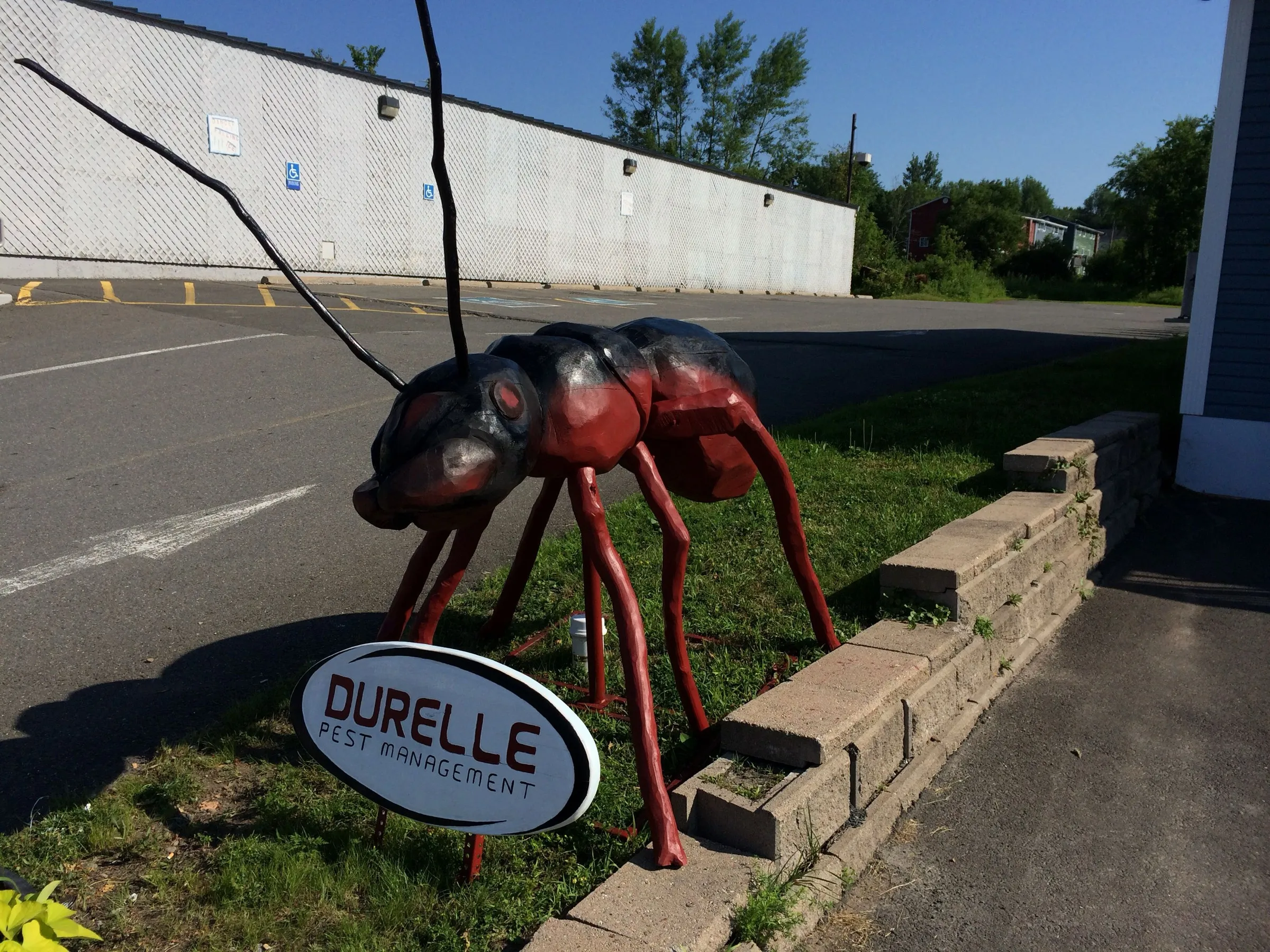
Ants are the treatment most often done badly, because the visible ants are not the problem. The colony is, and it is almost never where the trail is.
Carpenter ants are the ones that matter structurally. Large, black, and drawn to damp wood, they hollow out galleries to nest in — around leaking windows, under bathroom floors, in deck ledgers and roof edges. They do not eat the wood, they excavate it, which is why you find coarse shavings underneath their work.
Pavement ants come up through cracks in driveways, patios and basement slabs, and turn up in kitchens looking for anything sweet or greasy.
Seasonal invaders show up in numbers after heavy rain or in the first warm stretch of spring, when conditions outside push them to look for shelter and food indoors.
A trail of ants is a supply line, not a colony. Spraying it kills foragers and removes the pheromone path, so the ants disappear for a few days and you assume it worked. The colony simply routes around the gap. With some species, a repellent spray triggers budding — the colony splits and establishes satellite nests, and now you have two problems.
One-time treatments come with a written service guarantee.
Properties backing onto woods, older homes with a lot of exterior wood, and buildings with ongoing moisture issues get repeated pressure regardless of how well the last colony was dealt with. Those are the ones where the home protection program — service in spring and again in fall — costs less over a couple of seasons than repeat emergency calls.
5 out of 5 stars
“Bob completely eliminated my ant problem by treating it at the source — not just spraying around. I’m so happy… no more ants!”
5 out of 5 stars
“I discovered a yellow jacket wasp nest in my crawlspace, about the size of a volleyball. Called Bob and he had Connor drop by the next day to tackle the wasp nest and dust a bees nest we discovered in-ground near my back door at the same time. By next morning all pest activity had ceased.”
5 out of 5 stars
“Annual pest control provided by Durelle Pest Management services keeps our spiders & mosquito populations under control. A happy customer for over 10 years.”
Store-bought spray kills the ants you can see, which is a fraction of the colony and the replaceable fraction at that. The queen and the brood are elsewhere, usually in a wall void, under a slab or in damp wood outside, and they keep producing foragers. Killing the trail also scatters some species into satellite nests, which makes the problem harder.
Carpenter ants are large and black, often over a centimetre, and you will find coarse sawdust-like shavings below where they are working. Unlike termites they do not eat wood — they excavate galleries in it to nest, which is why the shavings pile up. Seeing them indoors in late winter usually means a nest inside the building, not visitors from outside.
They can, over time, and the damage tracks moisture. They target wood that is already damp or decaying — around a leaking window, a poorly flashed roof, a deck ledger, a chronically wet sill. The ants are often the visible symptom of a moisture problem that also needs fixing.
Yes. Interior work is targeted at the voids and entry points ants use rather than broadcast across living space, and we tell you before we start about any area to keep clear and for how long.
You should see a sharp drop within a few days as foragers carry the treatment back to the colony. A well-established carpenter ant nest can take a couple of weeks to collapse fully, and we would rather set that expectation than have you call on day three thinking it failed.
Learn more
Learn more
Learn more
Learn more